Social Media Optimization (SMO): A Complete Guide to Social Media Optimization
In today’s digital world, having a strong presence on social media is essential for businesses, brands, creators, and professionals. Simply creating social media accounts is not enough. Businesses need to optimize their profiles, content, engagement, and social media activities to reach the right audience and build a strong online presence.
This is where SMO (Social Media Optimization) plays an important role.
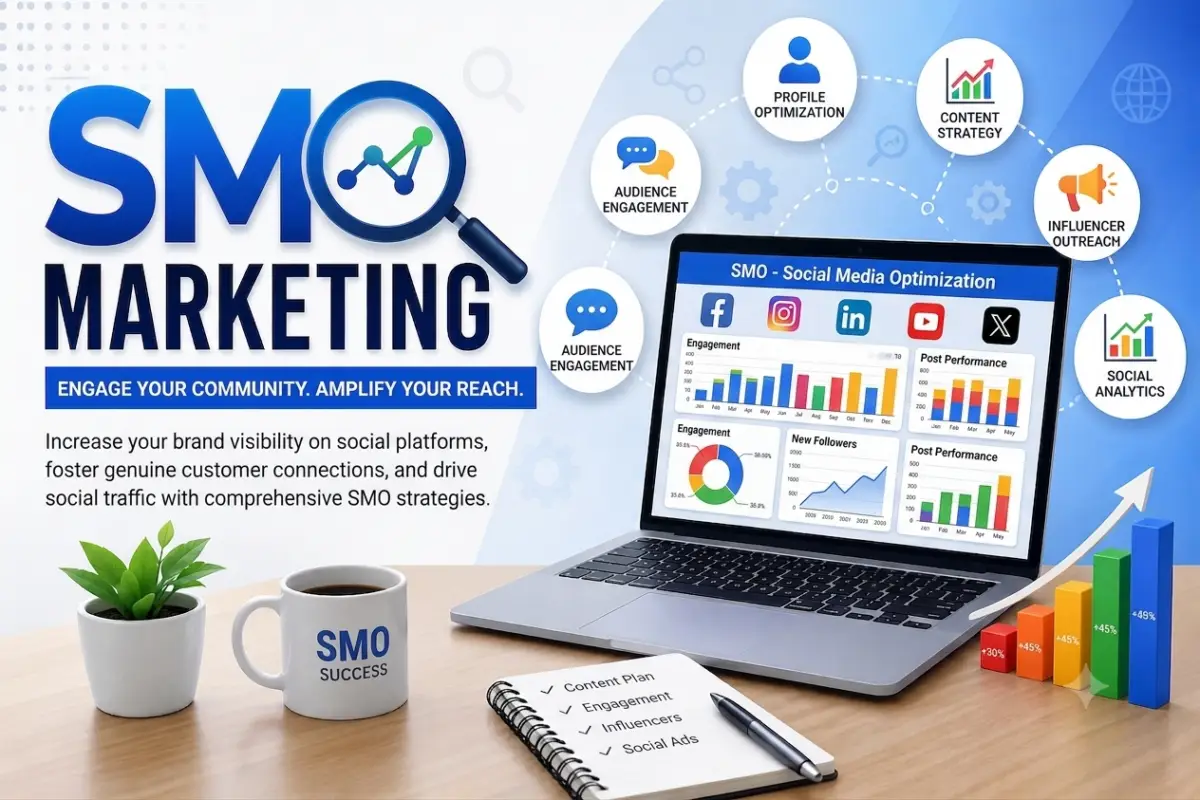
Social Media Optimization (SMO) is the process of improving social media profiles, content, and activities to increase visibility, engagement, audience reach, brand awareness, and website traffic.
For students, digital marketers, business owners, content creators, and aspiring social media professionals, understanding SMO is an important skill in today’s digital marketing environment.
What is Social Media Optimization (SMO)?
Social Media Optimization (SMO) is a digital marketing practice focused on optimizing social media profiles and content to improve a brand’s visibility, engagement, reach, and overall social media performance.
SMO involves optimizing platforms such as Facebook, Instagram, LinkedIn, YouTube, X, Pinterest, and other relevant social networks according to the target audience and business objectives.
A well-planned SMO strategy can help businesses:
- Increase social media visibility
- Improve audience engagement
- Build brand awareness
- Increase followers
- Generate website traffic
- Improve content reach
- Build an online community
- Support lead generation
- Strengthen brand credibility
SMO focuses primarily on organic social media growth and optimization, although it can also work alongside paid social media advertising.
Why is Social Media Optimization (SMO) Important for Businesses?
Social media platforms have become an important part of how people discover brands, products, services, educational content, entertainment, and businesses.
A business with an optimized social media presence can communicate directly with its target audience and build stronger relationships with potential customers.
SMO can help businesses:
- Increase brand visibility
- Reach a relevant audience
- Improve customer engagement
- Generate social media traffic
- Build customer relationships
- Increase content visibility
- Support lead generation
- Improve brand reputation
- Promote products and services
- Create an active online community
Social media optimization is not only about gaining followers. The primary goal is to attract the right audience and encourage meaningful interactions with the brand.
How Doe Social Media Optimization (SMO) Work?
SMO works by optimizing different elements of a social media presence, including profiles, content, captions, hashtags, visuals, posting schedules, engagement, and audience targeting.
A basic SMO process can include:
Profile Optimization → Content Planning → Content Creation → Hashtag Optimization → Publishing → Audience Engagement → Performance Analysis → Optimization
Each step contributes to improving the overall performance of a social media account.
Major Components of SMO
Social Media Optimization includes several important activities.
1. Social Media Profile Optimization
The first step in SMO is creating a professional and complete social media profile.
Important profile optimization elements include:
- Business or brand name
- Username
- Profile picture
- Cover photo
- Bio or description
- Website link
- Contact information
- Business category
- Location
- Call-to-action buttons
- Relevant keywords
A properly optimized profile makes it easier for users to understand what the brand offers.
2. Content Optimization
Content is one of the most important parts of Social Media Optimization.
Social media content should be useful, relevant, engaging, and suitable for the selected platform.
Common types of social media content include:
- Images
- Reels
- Short videos
- Stories
- Carousels
- Infographics
- Educational posts
- Promotional posts
- Polls
- Questions
- User-generated content
- Testimonials
- Behind-the-scenes content
- Live videos
Content should be created according to the interests, needs, and behavior of the target audience.
3. Hashtag Optimization
Hashtags can help categorize social media content and improve content discovery on platforms that support them.
For example, a digital marketing institute may use relevant hashtags such as:
- #DigitalMarketing
- #SEO
- #SocialMediaMarketing
- #DigitalMarketingCourse
- #DigitalMarketingTraining
- #MarketingTips
Instead of using a large number of unrelated hashtags, businesses should focus on relevant and meaningful hashtags.
Hashtag strategies should also be adapted according to the platform and current content trends.
4. Caption Optimization
Captions provide context to social media posts and can encourage users to interact with content.
An effective caption can include:
- A strong opening line
- Useful information
- Relevant keywords
- Questions
- Benefits
- A clear call to action
For example:
“Want to learn Digital Marketing from industry experts? Join our practical Digital Marketing course and develop job-ready skills.”
A good caption should be easy to understand and relevant to the target audience.
5. Visual Content Optimization
Visual content plays a major role in social media marketing.
Businesses should pay attention to:
- Image quality
- Video resolution
- Correct dimensions
- Typography
- Branding
- Logo placement
- Readability
- Thumbnail design
- Visual consistency
Professional and consistent visuals can help create a recognizable brand identity.
6. Posting Schedule Optimization
Posting consistently can help businesses maintain an active social media presence.
A social media posting strategy may include:
- Daily posts
- Weekly reels
- Stories
- Educational content
- Promotional content
- Festival posts
- Industry updates
- Customer testimonials
The ideal posting frequency depends on the platform, audience, content type, and business goals.
Businesses should analyze their audience activity and use performance data to determine suitable posting times.
Social Media Engagement
Engagement is an important part of SMO.
Social media engagement can include:
- Likes
- Comments
- Shares
- Saves
- Reactions
- Mentions
- Direct messages
- Poll responses
- Story interactions
- Video interactions
Businesses should actively respond to comments and messages and participate in relevant conversations.
High-quality engagement can help businesses build stronger relationships with their audience.
Social Media Platforms for SMO
Different social media platforms serve different purposes and audiences.
Facebook can be useful for:
- Business pages
- Community building
- Local businesses
- Educational content
- Video content
- Customer engagement
- Brand promotion
Instagram is highly focused on visual content and can be useful for:
- Reels
- Stories
- Carousels
- Images
- Influencer collaborations
- Product promotion
- Brand awareness
LinkedIn is particularly useful for:
- Professional networking
- B2B marketing
- Company branding
- Recruitment
- Industry content
- Professional education
- Business leads
YouTube
YouTube is a major platform for video-based content.
Businesses can use YouTube for:
- Tutorials
- Educational videos
- Product demonstrations
- Reviews
- Interviews
- Webinars
- Shorts
- Brand storytelling
X
X can be useful for:
- Real-time updates
- Industry discussions
- News
- Brand communication
- Customer interaction
- Short-form opinions and updates
The best platform depends on the business, target audience, industry, and marketing objectives.
Social Media Content Strategy
A successful SMO campaign requires a proper content strategy.
Businesses can create different content categories, such as:
Educational Content
Educational content helps users learn something useful.
Examples:
- SEO tips
- Digital marketing tips
- Social media tips
- Tutorials
- How-to guides
Promotional Content
Promotional content focuses on products, services, courses, offers, and special deals.
Engagement Content
Engagement content encourages users to participate.
Examples include:
- Questions
- Polls
- Quizzes
- “This or That” posts
- Comments-based activities
Inspirational Content
Inspirational content can include:
- Success stories
- Motivational quotes
- Student achievements
- Customer success stories
- Business journeys
Entertainment Content
Entertainment-focused content can improve audience interaction and shareability.
Examples include:
- Memes
- Trending reels
- Short videos
- Challenges
- Relatable content
A balanced content mix can help maintain audience interest.
SMO and SEO
SMO and SEO are different digital marketing techniques, but they can support each other.
SEO focuses primarily on improving visibility in search engines, while SMO focuses on improving visibility and engagement on social media platforms.
SEO can help businesses attract organic search traffic, while SMO can help distribute content, increase social engagement, strengthen brand awareness, and bring referral traffic.
Using SEO and SMO together can create a stronger digital marketing strategy.
SMO and Social Media Marketing
SMO and Social Media Marketing are closely related but are not exactly the same.
SMO focuses on optimizing social media profiles, content, engagement, and organic visibility.
Social Media Marketing (SMM) is a broader marketing approach that can include organic social media activities as well as paid advertising campaigns.
For example:
SMO: Optimizing an Instagram profile, captions, hashtags, reels, and engagement.
SMM: Running Instagram and Facebook advertising campaigns to generate leads or sales.
SMO can therefore be considered an important part of an overall social media marketing strategy.
Social Media Analytics and Performance Tracking
SMO is an ongoing process. Businesses need to monitor performance and improve their strategy based on data.
Important social media metrics include:
- Reach
- Impressions
- Engagement rate
- Likes
- Comments
- Shares
- Saves
- Followers
- Profile visits
- Link clicks
- Video views
- Watch time
- Leads
- Conversions
Different platforms provide their own analytics tools that can help marketers understand how content is performing.
Benefits of Learning SMO
Learning Social Media Optimization can provide valuable skills for students, marketers, business owners, freelancers, and content creators.
Major benefits include:
- Develops an important digital marketing skill
- Helps businesses improve social media presence
- Supports organic audience growth
- Improves content marketing skills
- Creates freelance opportunities
- Supports social media marketing careers
- Helps build brand awareness
- Improves audience engagement
- Supports lead generation
- Helps understand social media analytics
Career Opportunities in SMO
After developing practical SMO and social media marketing skills, learners can explore various career opportunities, including:
- Social Media Executive
- Social Media Specialist
- Social Media Manager
- Social Media Strategist
- Content Marketing Executive
- Digital Marketing Executive
- Social Media Analyst
- Content Creator
- Community Manager
- Digital Marketing Manager
Experienced professionals can also work as freelancers or provide social media management and optimization services to businesses.
How to Start Learning SMO
Beginners can follow a structured learning path:
Digital Marketing Fundamentals → Social Media Platforms → Profile Optimization → Content Strategy → Content Creation → Hashtag Optimization → Caption Writing → Engagement → Social Media Analytics → Social Media Strategy
Practical projects are extremely useful for understanding how SMO works in real-world situations.
Learners can create and manage test social media pages, develop content calendars, analyze performance, and experiment with different content formats.
SMO Best Practices
Some important SMO best practices include:
- Complete and optimize social media profiles
- Use professional branding
- Create valuable and original content
- Maintain consistent branding
- Use relevant hashtags
- Write engaging captions
- Post consistently
- Respond to comments and messages
- Encourage audience interaction
- Analyze social media insights
- Experiment with different content formats
- Follow platform-specific best practices
- Avoid irrelevant or excessive hashtags
- Focus on genuine audience engagement
The goal should be to build a valuable and trustworthy social media presence, rather than simply increasing follower numbers.
Common SMO Mistakes to Avoid
Businesses and beginners often make several mistakes while managing social media.
Common mistakes include:
- Posting without a content strategy
- Using irrelevant hashtags
- Ignoring comments and messages
- Posting low-quality visuals
- Copying competitors’ content
- Inconsistent posting
- Focusing only on promotional posts
- Buying fake followers
- Ignoring analytics
- Using the same content without adapting it to each platform
- Not understanding the target audience
Avoiding these mistakes can improve the effectiveness of an SMO strategy.
Conclusion
Social Media Optimization (SMO) is an important part of modern digital marketing. It helps businesses improve their social media visibility, reach relevant audiences, increase engagement, build brand awareness, and create stronger relationships with customers.
By learning profile optimization, content strategy, hashtag optimization, caption writing, visual optimization, audience engagement, social media analytics, and platform-specific strategies, aspiring digital marketers can develop a strong foundation in Social Media Optimization.
Whether you are a student, business owner, freelancer, content creator, or digital marketing professional, learning SMO can help you build and manage a strong social media presence.